

* Intel ( INTC ), Texas Instruments ( TXN ) due to report this week
* Semi index is down about 18% this month but up sharply for
2026
* US semi-related earnings overall seen up 133% year over
year for Q2
By Caroline Valetkevitch
NEW YORK, July 20 (Reuters) - Chipmakers are in focus on
Wall Street, with their shares turning mercurial this month and
investors banking on a few dozen newly valuable companies to
deliver nearly half of S&P 500 profit growth for the second
quarter.
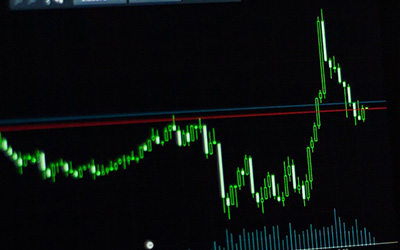
The PHLX Semiconductor index has surged this year,
reflecting massive gains at firms such as Micron Technology ( MU )
, Advanced Micro and Broadcom ( AVGO ), but lately
the 30-stock index has become a volatility show. The index is up
65% for the year, compared with a 9% gain in the S&P 500,
but is off 18% for July after swinging at least 3 percentage
points up or down on half of the month's 12 trading days.
The semi index also ended Friday down just over 20% from its
late-June all-time closing high.
Worries about the sustainability of AI demand for chips and
the boom-bust trading in semis have prompted investors to
reassess the sector. Results should be strong, but will they be
enough to break the summer swoon? And if not, does a rockier
summer lie ahead for the rest of the market, given the scale of
this surging sector?
"The daily moves for companies this big are just shocking,"
said Rick Meckler, partner at Cherry Lane Investments, a family
investment office in New Vernon, New Jersey. "Would the earnings
picture change that? Certainly a disappointing outlook could."
BIG GAINS ON THE BOTTOM LINE
Earnings for S&P 500 semiconductors and semi equipment
companies are forecast to rise 133% for the second quarter from
a year ago, with the group expected to contribute about 44% of
overall S&P 500 company earnings gains, according to Tajinder
Dhillon, head of earnings research at LSEG.
Earnings for S&P 500 companies overall are expected to have
increased 26% in the second quarter from a year ago, based on
LSEG data as of Friday.
Among U.S. chipmakers, Intel ( INTC ) and Texas Instruments ( TXN )
are due to give results this week. Nvidia's ( NVDA )
results are not due until late August.
But the market reaction to some prominent earnings reports this
past week suggests sentiment has begun to shift. On Thursday,
U.S.-listed shares of Taiwan Semiconductor Manufacturing ( TSM )
, the world's largest contract chipmaker, slipped even
though the company posted a 77% jump in second-quarter net
profit and beat market forecasts.
Earlier this month, shares of Samsung Electronics ( SSNLF )
fell sharply even though the company reported a 19-fold jump in
second-quarter operating profit.
SCRUTINIZING THE ROLE OF LEVERAGE
Market watchers in part pin the volatility on the SOX and its
constituents becoming retail favorites and fueling the rise of
leveraged exchange-traded funds. Leveraged ETFs amplify market
volatility by creating additional demand for shares when they
rise and prompting more selling when they fall.
"One thing that's driven a lot of these stocks has been
option activity by retail investors. That's a big factor in just
how volatile the stock moves have become," Meckler said.
South Korea's financial regulator on Thursday unveiled
regulatory measures to ease market volatility triggered by
single-stock leveraged ETFs. These ETFs, linked to chipmakers
Samsung Electronics ( SSNLF ) and SK Hynix ( SKHY ), were introduced in
South Korea in late May.
"While the performance of the semiconductor space has been
something to behold, so too has its volatility," BTIG wrote in a
recent note. That has set off some ominous signals, with "many
of them rhyming with the March 2000 peak," it added.
Rising AI spending has helped drive the chips frenzy, said
Jake Dollarhide, chief executive officer of Longbow Asset
Management in Tulsa, but worries are now taking hold that the
optimism is overheated.
"This chip demand for AI is not a forever scenario,"
Dollarhide said. And during the earnings season, "anybody who
disappoints is going to get clobbered."
Chipmakers have long been considered cyclical companies
whose rise and fall depend in large part on activity elsewhere
in the global economy. The rise of AI has intensified that
relationship.
One reason for optimism may be that it is more than just
data center exposure that is boosting demand, said Daniel
Morgan, portfolio manager at Synovus Trust in Atlanta, citing
industrial electronics, wireless communications and cars.
"You're seeing a broadening out," he said.
"The only place where I still see continued weakness is in
the chips that go into handsets," he said, noting that Qualcomm ( QCOM )
is among those chipmakers.



 zpostcode
 Recruit
 weather
 mreligion
 Yellowpages
 sport
 constellation
 shopping
 name
 game
 directory
 literature
 Word
 tour
 furnish
 Lottery
 tftnews
 lyrics
 News
 digital
 car
 dir
 Edu
 Finance