



LONDON, Aug 6 (Reuters) - A few years ago, when almost every bank research note seemed to focus on soaring U.S. tech stocks, veteran emerging market fund manager Carlos von Hardenberg was struggling to get investors interested in anything else. Not any more.
Now the AI boom has lit a rocket under the South Korean and Taiwanese firms that dominate high-tech memory chip making and, as of this year, the global EM stock indexes that have emerged from Wall Street's shadow.
"Investors would say they were only interested in the U.S. and Magnificent Seven, and this is all you need because they were doing so well," said Hardenberg, who co-founded MCP Emerging Markets in 2018 alongside pioneering EM bull Mark Mobius.
"Now this year, everything turned the other way around."
But riding the AI boom has come at a cost. Since late June extreme volatility has taken hold, almost as if investors suddenly got altitude sickness.
South Korea's KOSPI index, which had doubled in value on the back of even bigger gains for Samsung Electronics and SK Hynix, ripped back 40% in just six weeks on a mix of concerns and curbs. Taiwan's TSMC, by far the biggest company in the EM stock universe, fell almost 14%.
It sent volatility in South Korea skyrocketing and even for MSCI's $1.8 trillion EM benchmark, which contains more than 1,175 companies from 24 different countries, it surpassed the peaks of the COVID pandemic.
"The clients that we speak to, the institutional clients, are struggling with the level of volatility in Korea at the moment," said William Bratton, head of cash equity research for APAC at BNP Paribas.
"To the point that they think that any sort of fundamental positive earnings story that may exist - and we believe does exist - is not worth pursuing at this point."
CAREFUL WHAT YOU WISH FOR
Korea and Taiwan are only still classed as EMs by MSCI for the technical reason that it can be difficult for international investors to trade their currencies.
For some the risk of the recent mayhem is that all those old longings for some Mag 7-style excitement in EM become a classic case of "careful what you wish for".
Just nine companies - mostly the big Taiwanese and Korean tech firms, plus Alibaba and Tencent in China - now account for more than 40% of MSCI EM, making it even more top heavy than the U.S. index.
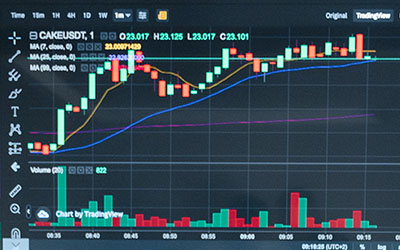
The Korean market's swings have even been larger than cryptocurrency bitcoin's this year, while the recent rout saw the most dramatic drop in the MSCI EM index's "liquidity factor" ever - a result, the firm's chief research officer says, of investors moving away from the shares that had been surging.
"What we're seeing is that emerging markets, which people used to look to as a source of diversification, because of the emergence and importance of these extremely large AI-related, particularly AI hardware-related companies, are not really a source of diversification anymore," MSCI's research head Ashley Lester said.
"They're right in the centre of the AI boom."
RIDE THE VOLATILITY
Ji Young Park, a portfolio manager at Europe's biggest fund manager Amundi, said she had started scaling back some of her exposure before the turbulence kicked off, but that the selloff had still been costly.
"I think in the last month there have been six or seven circuit breakers (on the Korean stock market), so it tells you just how volatile it has been," Park said.
While giant lurches aren't necessarily a limiting factor for her fund, they do cause caution.
"That's not the kind of investor that I am because I'm trying to buy a stock over five years," Park added. "And I quite like to sleep at night."
UBP technology portfolio manager, Dimitri Kallianiotis, said some of his private bank clients have been spooked too, although his advice has been not to panic.
LSEG data shows that the too-big-too-fast factor meant international investors pulled money out of Asia-ex China share markets faster than during any six months going back to at least 2010 in the first half of the year.
South Korea and Taiwan bore the brunt, shedding over $100 billion and $44 billion respectively, according to JPMorgan, as rules designed to prevent funds holding too much of any one stock saw investors cash in some of the respective 500% and 1,100% 12-month gains on Samsung and SK Hynix.
"Ride the volatility and try to avoid the overhyped names," UBP's Kallianiotis said. "If you are not invested in the tempest days, you won't be there for the rebound."
(Additional reporting by Ankur Banerjee in Singapore; editing by Dhara Ranasinghe and Aurora Ellis)


 zpostcode
 Recruit
 weather
 mreligion
 Yellowpages
 sport
 constellation
 shopping
 name
 game
 directory
 literature
 Word
 tour
 furnish
 Lottery
 tftnews
 lyrics
 News
 digital
 car
 dir
 Edu
 Finance


